Advertisement Feature
The Caribbean has become a hugely popular destination among those looking for adventure and excitement.
In fact, it has become a huge hit among people looking to relocate and enjoy a more relaxed lifestyle. For those who want to move to the Caribbean, it is well worth finding out more about how to get Caribbean citizenship through investment, ancestry, or residency pathways. If you are simply looking to visit and soak up some culture, this is the guide for you!
Caribbean festivals give you a chance to connect directly with each island’s heritage, music, food, and community spirit.
These events are more than entertainment. They reflect the region’s history, its blending of cultures, and long-standing traditions that help tie generations together. Visitors travel across the islands each year to enjoy live performances, street parades, and celebrations that carry deep cultural meaning.
Exploring festivals allows you to discover details about local life that you do not always encounter through resorts or beaches. Each island highlights its own story through costumes, drums, ancestral rituals, and community gatherings.
If cultural travel matters to you, these festivals offer a fascinating insight into Caribbean identity.
Travel Tips for Experiencing Festivals Like a Local
Before exploring different travel options, it is essential to understand that festival travel requires patience and thorough preparation.
- Book your accommodation early: During major festivals, room availability reduces quickly. Book early if you plan to attend events in Trinidad, Barbados, or Jamaica. Staying in smaller guesthouses or family-owned inns can give you a closer connection to local hosts.
- Understand how transportation works during event weeks: Many islands adjust road closures, shuttle services, and public transport schedules during festivals. If you plan to attend sunrise religious gatherings, pre-dawn parades, or late-night concerts, check transportation notices in advance.
- Respect cultural spaces: Some events include spiritual or ancestral ceremonies. Visitors are welcome, but please note that photography rules and attire guidelines might apply. Asking local organizers helps you participate respectfully.
- Explore community-led tours: Many islands offer specialized tours during festival weeks. These include costume-making workshops, cooking demonstrations, and historical walks. Participating in these activities provides a cultural context that enriches the festival experience.
Carnival Season: The Heartbeat of Caribbean Celebration
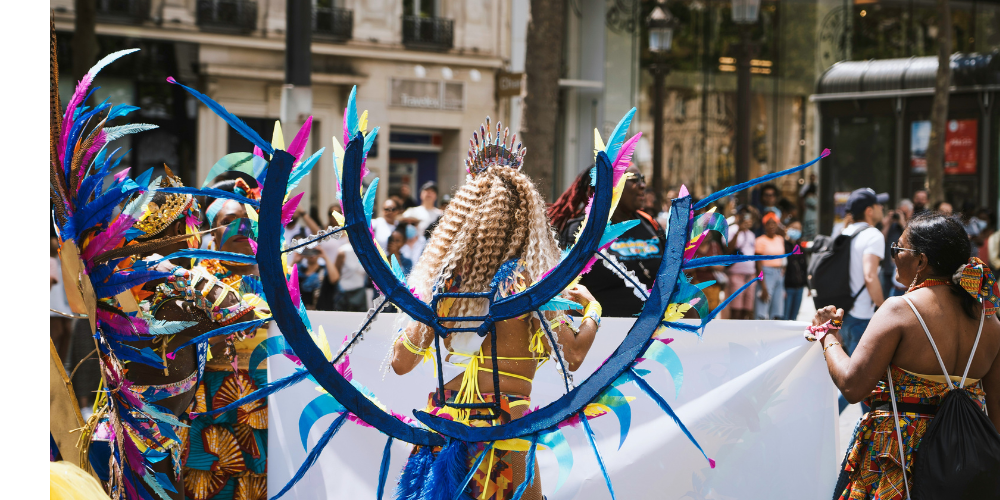
Carnival stands as the region’s most famous celebration, with roots in emancipation and community expression. Every island shapes Carnival differently, but the shared rhythm includes colorful costumes, steelpan music, dance, and grand parades.
The Trinidad and Tobago Experience
Many travelers call Trinidad and Tobago’s Carnival the most influential in the region. The event welcomes thousands of visitors and sets the creative standard for costumes and music.
Masquerade bands train and prepare throughout the year, working with designers, choreographers, and musicians. The two main parade days bring an impressive display of technique, color, and artistry.
Calypso and soca competitions add even more depth. Artists prepare new songs each season that address social issues, humor, and national pride. For travelers, this means a chance to witness cultural commentary delivered through high-energy music and performance.
Jamaica, Barbados, and Saint Lucia
Other islands host Carnivals with their own personality. Jamaica’s event builds on the culture of dancehall and street performances. Barbados stages Grand Kadooment as part of the Crop Over season, originally tied to the sugar harvest. Saint Lucia combines traditional bands with modern music, offering visitors a unique blend of heritage and contemporary style.
For a fuller understanding of Caribbean culture, attending Carnivals across multiple islands reveals how shared traditions evolve into distinct local expressions.
Food and Heritage Festivals That Capture Local Flavor
Beyond Carnival, many islands celebrate their culinary identity and historical roots through festivals built around food, farming, music, and community gatherings.
These events help you understand how ingredients, traditions, and migration shaped the region’s cooking styles.
Jamaica’s Food Festivals
Jamaica’s culinary scene grows stronger each year. Events such as the Jamaica Food and Drink Festival and the Portland Jerk Festival bring together chefs, home cooks, and food entrepreneurs. You can taste dishes that represent Maroon heritage, East Indian influence, and local farming practices.
A key advantage of attending these festivals is learning how Jamaican producers adapt their cooking to modern preferences while respecting long-standing traditions. You also gain insight into how local agriculture supports both everyday meals and high-profile food culture.
Barbados’ Cultural Showcase
Barbados hosts events throughout the year focused on rum, seafood, and traditional cooking. The island has documented links to early rum production, and its festivals highlight both the craft and the history behind it. Attending one gives you an educational glimpse into how rum evolved from a plantation-era product into a globally recognized spirit.
Barbados also organizes heritage walking tours and museum programs during these events. These extras help you connect festival cuisine with the island’s ancestry, trade history, and maritime connections.
Why Food Festivals Matter for Cultural Understanding
Food festivals reveal a side of the Caribbean that tourists do not always see. These events explain:
- Local farming challenges and how each island adapts to climate patterns
- The influence of African, Indigenous, Indian, Chinese, and European communities
- How families preserve recipes through generations
- The impact of regional trade on food availability
When you join these gatherings, you learn how food functions as both identity and livelihood across the islands.
Music, Arts, and Indigenous Traditions Worth Experiencing
Many festivals highlight the performing arts, traditional crafts, and Indigenous stories, which help visitors understand the depth of Caribbean identity.
These events serve as cultural record-keeping systems, carrying knowledge from past generations into modern celebrations.
The Dominica World Creole Music Festival
Dominica’s festival places Creole culture at the center. Performers from Haiti, Martinique, Guadeloupe, and Louisiana join Dominican artists to celebrate the rich heritage of Creole languages and rhythms. You can hear cadence-lypso, bouyon, and traditional drumming styles rooted in Kalinago and African heritage.
The event also teaches visitors about regional linguistic history. For those curious about cultural preservation, Dominica provides a clear example of how music helps maintain a shared identity across countries that do not share the same official language.
Carriacou’s Maroon and String Band Festival
Carriacou, part of Grenada, hosts a festival that celebrates its ancestral traditions. Rituals, drums, and folk dances reflect the cultural connections to West African societies. Families gather to honor community elders and share stories that have been passed down through generations.
This festival provides an opportunity to observe how cultural practices survive in small communities. You learn how rituals evolve while maintaining their symbolic meaning.
Saint Kitts and Its Link to Community Storytelling
Saint Kitts showcases folklore through masquerade troupes, folk chants, and age-old Christmas Sports traditions. Local performers use dance, satire, and storytelling to express community narratives. You can gain insight into how island communities preserve memory through performance rather than written history.
These festivals give visitors access to Indigenous and folk traditions that exist outside mainstream entertainment. They contribute to a deeper understanding of the Caribbean as a region shaped by diverse cultures, rather than a single origin.
A Moment to Connect with the Caribbean’s Story
Caribbean festivals bring together history, community pride, and artistic expression. Each celebration helps you see how families, musicians, elders, and young performers contribute to the region’s living culture.
When you explore these festivals, you gain a clearer sense of how Caribbean communities honor their past while shaping their future.